Strong communities are built when people have access to the resources, relationships, and opportunities they need to thrive. For many urban Black communities, however, longstanding disparities in healthcare, education, employment, housing, and access to supportive services can create barriers that are difficult for individuals and families to overcome alone.
A community hub can help change that.
A community hub is more than a physical building. It is a welcoming place where residents can connect with services, develop relationships, find opportunities, and work together to strengthen their neighborhood. By bringing multiple resources together in one accessible location, a hub can reduce the challenges people often face when trying to navigate disconnected systems.
Making Resources More Accessible
One of the greatest benefits of a community hub is convenience. Residents may need assistance with employment, housing, healthcare, education, financial literacy, legal services, or social support, but those services are often spread across different organizations and locations.
A community hub can bring many of these resources closer to the people who need them.
Instead of asking residents to navigate multiple agencies on their own, the hub can serve as a central point of connection. Workshops, resource fairs, referral services, technology access, and partnerships with local organizations can make it easier for individuals and families to identify and access support.
Creating a Sense of Belonging
Access to services is important, but community wellbeing also depends on connection.
A welcoming community hub can create a place where residents feel seen, respected, and valued. Cultural events, neighborhood meetings, support groups, mentoring programs, and recreational activities can help build relationships among people who live in the same community.
Those relationships can become a powerful source of social support.
When residents know where to find help—and know the people providing it—they may be more likely to seek assistance before a challenge becomes a crisis.
Addressing Disparities Through Partnership
A successful community hub does not have to solve every problem itself. Its strength can come from partnership.
Local nonprofits, schools, healthcare providers, businesses, faith-based organizations, educators, entrepreneurs, and residents can work together to address community priorities. This collaborative approach can help reduce duplication, identify gaps in services, and create more coordinated solutions.
Most importantly, residents should have a voice in determining what the hub provides. Community development works best when programs are shaped by the people who understand local needs firsthand.
Investing in Long-Term Community Wellbeing
A community hub represents an investment in people.
When residents have better access to resources, opportunities to learn, places to connect, and support during difficult periods, the benefits can extend beyond individual households. Stronger families can contribute to stronger neighborhoods, and stronger neighborhoods can create greater opportunities for future generations.
The goal is not simply to create another service center. It is to create a trusted community institution—one that brings people together, connects them with opportunity, and helps turn community strengths into lasting progress.
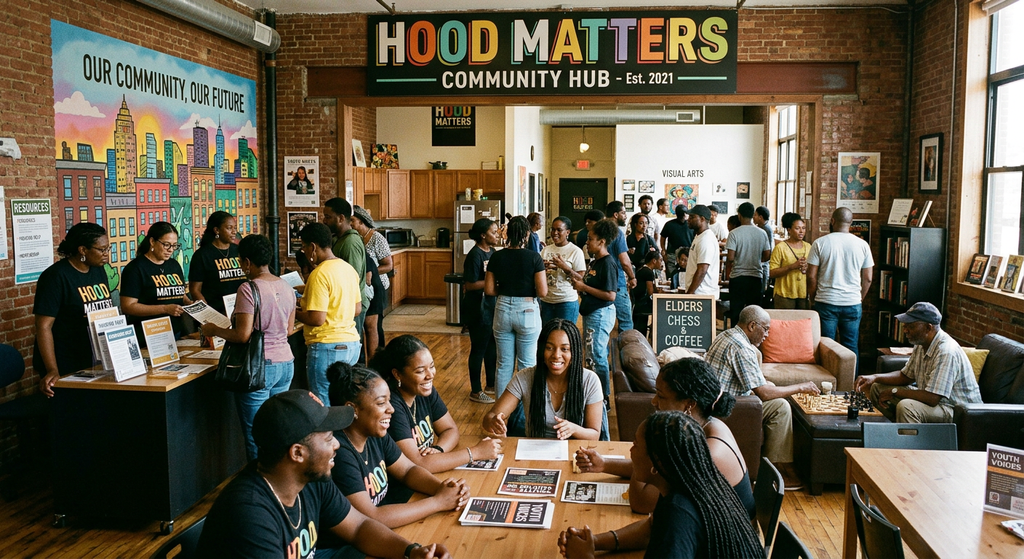

For more information about Hood Matters, please visit : www.HoodMatters.com

Leave a Reply